


Last week, I wrote about the routine Rebecca and I follow each week, and I hope the additional content was helpful and encouraging as you thought through Paul’s teaching in Romans chapter fourteen. Today, I want to provide a few more things that I should have put on the screens on Sunday as we think together about helpful practices that will guide believers toward faithful living before God and man.
The “Blessed” Life
Blessed describes a profound inner state of spiritual well-being and joy that results from being in a right relationship with God, regardless of outward circumstances.
In verse twenty-two, Paul reveals that the believer who has tested an action by Scripture, is fully persuaded that the action is consistent with their faith in Christ, and can therefore partake with thanksgiving while glorifying God is blessed.
When we see the word “blessed” in the New Testament, we often think of being happy, but the word means much more than the emotion we know as happiness. Blessed is rightly tied to a settled condition that is independent of our circumstances. A helpful definition, therefore, is this: Blessed describes a profound inner state of spiritual well-being and joy that results from being in a right relationship with God, regardless of outward circumstances.
Paul is saying that believers are blessed when they are fully confident that an action does not violate God’s will because they do not have to condemn themselves for taking part in it. In other words, their consciences—calibrated by Scripture—approve.
How to Determine What to Do
One question many Christians ask is how to determine what they can and cannot partake of or participate in. In the sermon, I provided three tools (in the 9:30 service, I said four—sorry) to help you determine whether something is right or wrong.
- You must know Scripture. We believe God’s Word is sufficient and sufficiently clear. That simply means that the Bible contains the answers you need to determine whether something is prohibited, prescribed, or a matter of Christian liberty. But you cannot know what the Bible says without digging in and thinking deeply about how Scripture applies to a specific issue. For example, the Bible doesn’t say anything explicitly about smoking marijuana—so it must be okay to enjoy some weed every once in a while. But is Scripture actually silent on that issue? I don’t believe so. The New Testament explicitly teaches that believers are to have sound, sober, and disciplined thinking between fifteen and twenty times. Because marijuana impairs sound, sober, and disciplined thinking, smoking marijuana is not a matter of Christian liberty.
- Seek input and advice from wise and godly believers. In the sermon, I noted that wise and godly believers never contradict the Bible but will always direct you toward faithful obedience. Wise and godly believers always recognize and submit to biblical authority.
- Pray for God to give wisdom regarding the issue. God delights to give His children wisdom, and He has promised that if we acknowledge our lack of wisdom and ask Him to supply what we need, He will graciously and generously give us what we need when we need it.
The Proper Motivation
The greatest desire of every believer, whether strong or weak, must be to trust and obey God. In verse twenty-three, Paul reveals that to act apart from faith is sin. That simply means that an action may not be inherently sinful, but if we are not convinced that it is consistent with our faith in Christ, then it becomes sinful for us. Therefore, if you cannot say that you believe an action pleases Christ, you must not proceed.
Hope for the Self-Condemned
If you have violated your conscience, there is no reason to despair. Confess your sin to Christ and realize that there is no condemnation for those who are in Christ Jesus (Rom. 8:1). Every person who comes to God through faith in His Son is fully cleansed from sin, credited with the righteousness of Christ, and fully accepted as a child of God and an heir with Jesus. A clear conscience is restored through repentance, faith in Christ’s cleansing work, and renewed obedience to His Word.
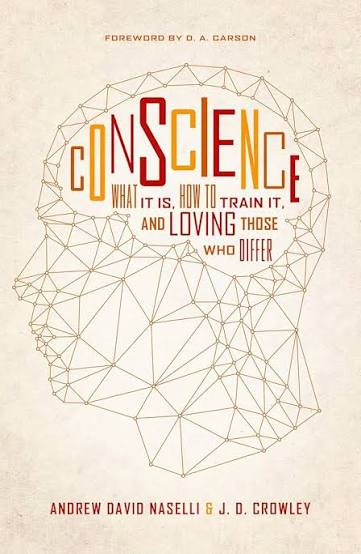
Working through issues of conscience can be incredibly challenging, as some of you have discovered in your small-group discussions. If you would like to read more about the conscience, I highly recommend the book, Conscience: What It Is, How to Train it, and Loving Those Who Differ by Andrew David Naselli and J.D. Crowley.
Discover more from Matt Keller
Subscribe to get the latest posts sent to your email.